Compsognathus
Comp-sog-nath-us
Name meaning: Elegant Jaw
Time Period:Tithonian (End of the Jurassic) 150.8–145 Mya
Locations: Germany/France
Taxonomy: Theropoda-Compsognathidae
Subspecies: C. longipes
Characteristics ~ ~ ~ ~
Compsognathus could grow up to 4 feet one inch long and only weighed around 5 ½ pounds. Compsognathus is known and popularized for its small size, but was the largest dinosaur in its environment, sharing the limestone beds where it was found with other flying animals like Archaeopteryx, Rhamphorhychus, and Pterodactylus, and sea creatures like fish, crustaceans, and mollusks. It has been found with fossilized remains of a small lizard called Bavarisaurus in its stomach, but it probably also ate other small animals, insects, and fish.


History & Fossils ~ ~ ~ ~
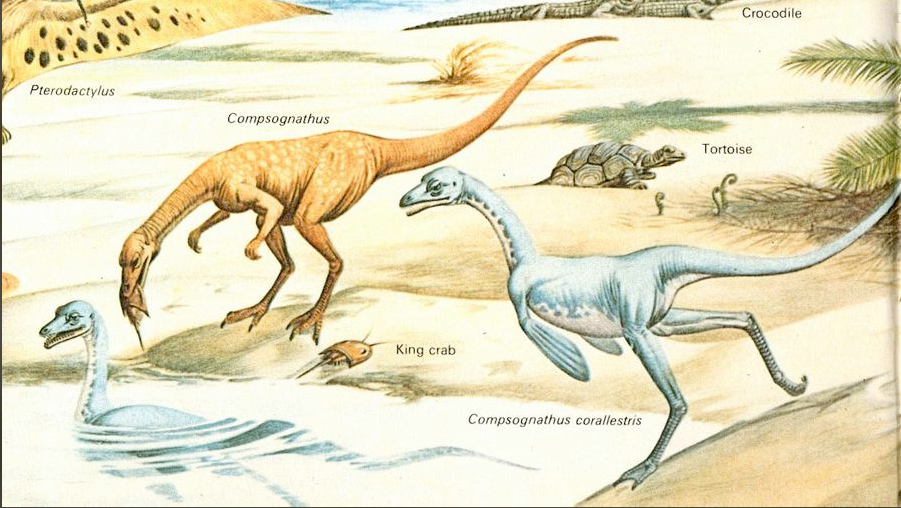
Compsognathus BSP AS I 563 was discovered in 1859 and named by Johann A. Wagner. The German specimen was a juvenile, only around 30 inches long. Darwinist Thomas Henry Huxley believed Compsognathus was directly related to Archeopteryx because they were both from the same formation and were very small. Believing that over time, Compsognathus grew feathers and was an earlier ancestor to birds. But that is not the case. They are not that phylogenetically close and lived in the same place at the same time. Compsognathus was also, at the time of its discovery the smallest dinosaur. Compsognathus corallestris is an invalid species from the French specimen of Compsognathus. The cracks on the rocks lead scientists to believe that the forelimbs of this Compsognathus supported flippers, which made some sense since it lived in an island chain, and the animal likely did not use its arms that much.


Media Deptictions ~ ~ ~ ~
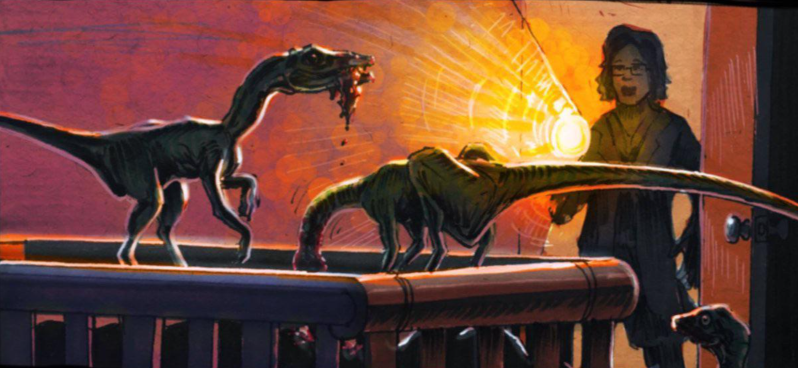
Jurassic Franchise Compsognathus is the premier small dinosaur of the series. Making its film debut in the Lost World, they are depicted as the most relentless hunters out of all the dinosaurs, attacking humans and prey multiple times larger than themselves in massive packs that could probably reach triple digits. Dr. Robert Burke in the movie refers to it as Compognathus Triassicuswhich is because in the novels they were originally an entirely different genus Procompsognathus Triassicus. Superficially they both are rather similar however Procompsognathus is from the Triassic and Coelphysidae. I think they changed it because Compsognathus is 3 letters less of a mouthful than its pro counterpart. Anyways, novel Procompsognathus depicts a mild venomous bite containing serotonin and narcotics, causing potential allergic reactions, drowsiness and contentedness. These companies are also coprophagists cleaning up much of the feces around the island.