Kaprosuchus
Kap-roe-soo-cussName meaning: Boar Crocodile
Time Period: Cenomanian (Late Cretaceous) 95 Mya
Locations: Niger-Echkar Formation
Taxonomy: Crocodylomorpha-Mahajangasuchidae
Subspecies: K. saharicus
Characteristics ~ ~ ~ ~
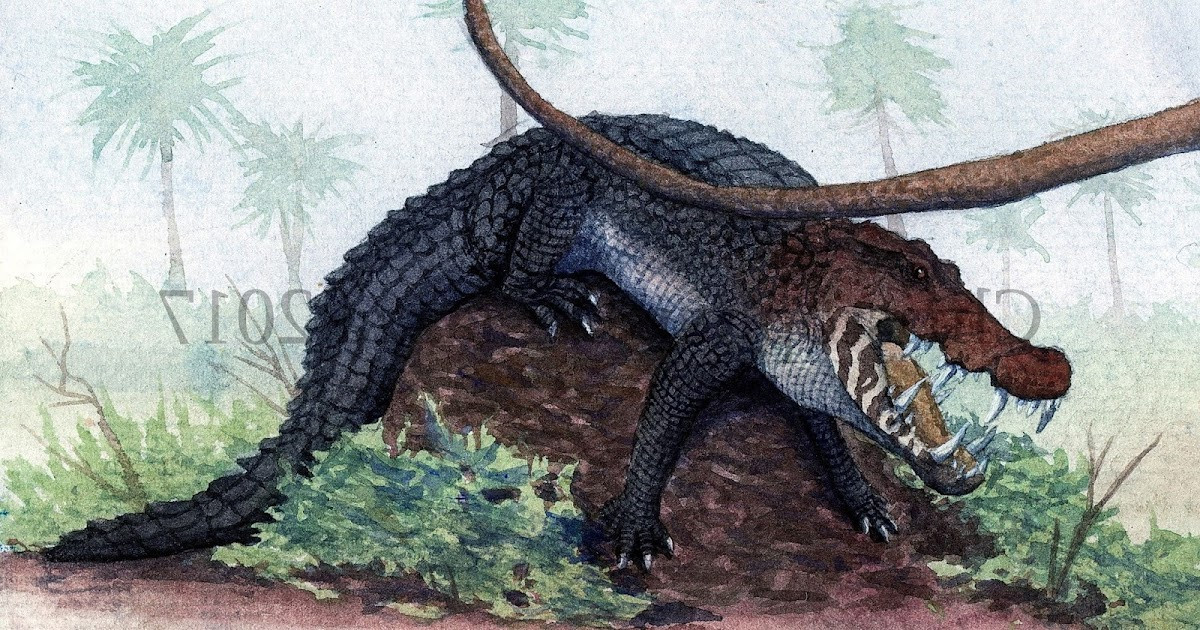
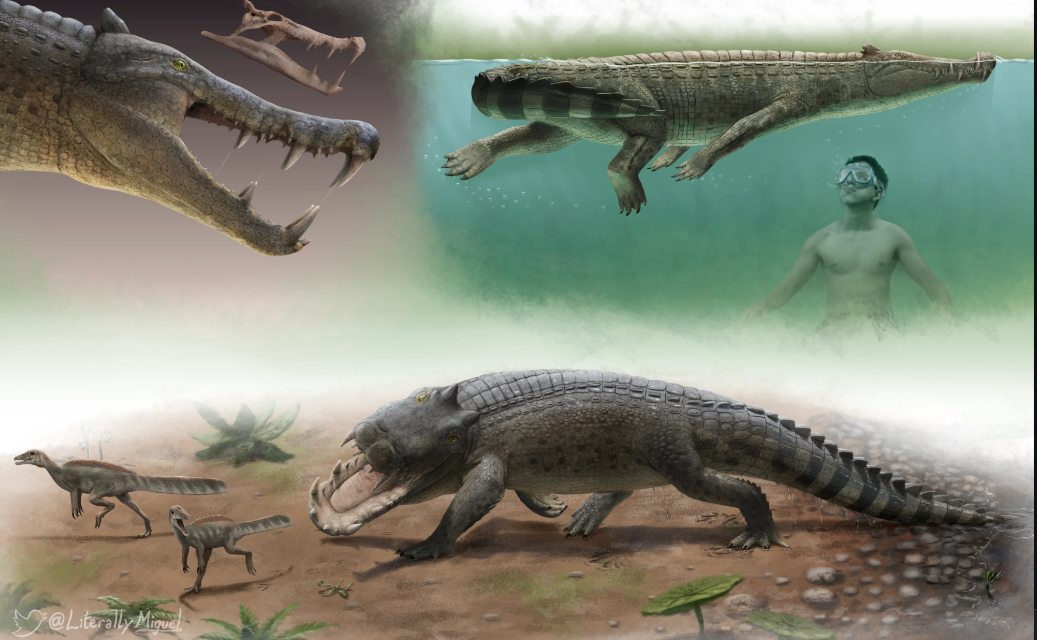
Kaprosuchus is a popular species of crocodyliform known for its terrestrial capabilities. This is presumed because Kaprosuchus' skull's orbits faced further forwards than most crocodilians, giving it better stereoscopic vision for ambush hunting on land compared to crocodiles whose eyes are positioned further upwards and to the side for better vision above the surface of the water. However the only Kaprosuchus fossil we know of is an almost complete skull, no body material is known, and Kaprosuchus’ closest relative Majungasuchus is an aquatic crocodile although it does have proportionally longer legs that most crocodiles. We can’t be certain till more fossils are found, but the consensus is likely more aquatic than depicted and likely wouldn’t be as much of a galloper. Kaprosuchus is named the boar crocodile because of its 6 large anines that jut out of the side of its mouth that resemble tusks. At the back of its skull are two horn-like structures that could have been a display feature. Estimates are assumed to be around 7-12 feet long. The Echkar formation was warm and humid with lots of river systems species that might have coexisted with Kaprosuchus are Spinosaurus, Carcharodontosaurus, Araripesuchus, Aegyptosaurus, and Elaphrosaurus.
History & Fossils ~ ~ ~ ~
As I said earlier Kaprosuchus is only known by one skull MNN IGU12 so unless you're going to go to Africa to excavate more fossil material im not going to elaborate further.


Media Deptictions ~ ~ ~ ~

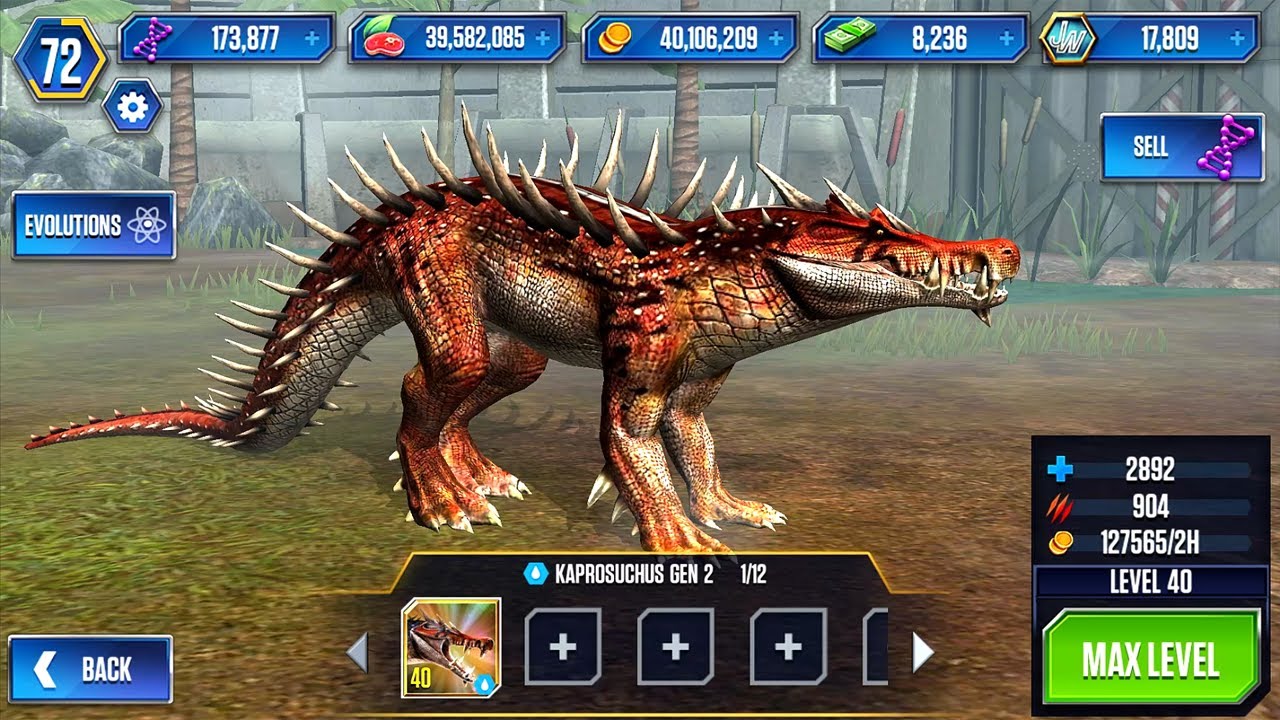
Jurassic Franchise Kaprosuchus was originally in Jurassic Park Builder as a Cenozoic species even though it's from the Mesozoic just like Deinosuchus and Sarcosuchus. In the Jurassic World mobile games it's portrayed with tall legs and a bright pattern similar to a lepoard. Kaprosuchus produces some interesting noises which are a blend from lions, a tigers, and a leopards, rhino grunts, pigs, and a walrus. Kaprosuchus in Jurassic World the Game has giant spines emerging from it's sides, and is exactly the kind of thing 10y old me would find badass



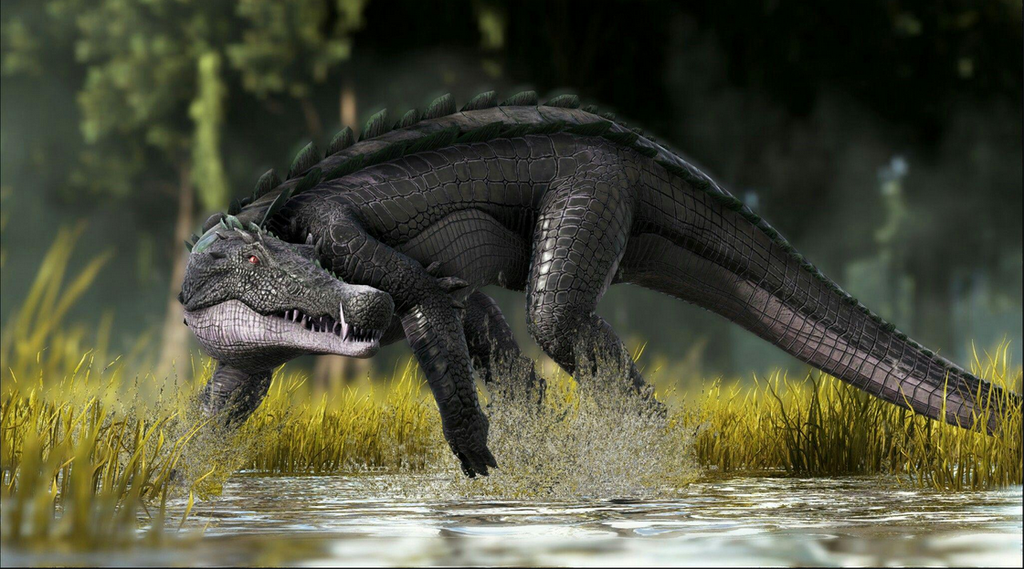
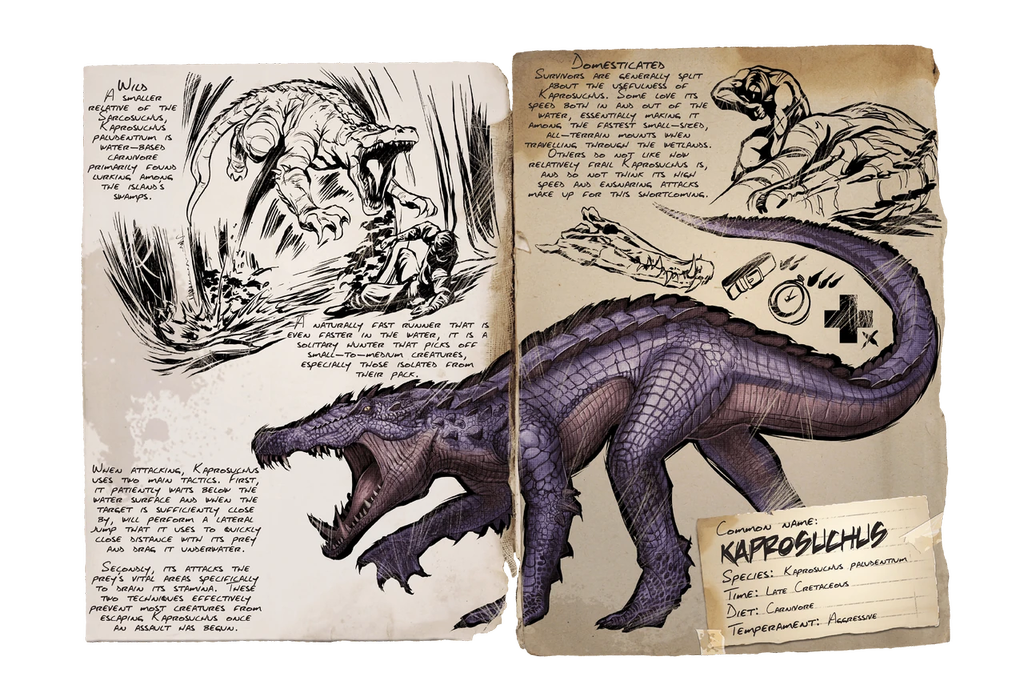
ArkKaprosuchus lives in certain swamp areas in Ark survival evolved. It is most well known for pouncing at the player in the dark like the fnaf2 foxy jumpscare. Kaprosuchus can be ridden with a saddle and is very quick given this design has extremely long legs
Extras: ~ ~ ~ ~
Kaprosuchus by David RR on Sketchfab
Articles: