Allosaurus
Al-loh-sore-us
Name meaning: Different Lizard
Time Period: Kimmeridgian to Tithonian (Late Jurassic) 155-144 Mya
Locations: Oklahoma-Morrison formation | Alcobaça/Bombarral/Lourinhã formations-Portugal
Taxonomy: Theropoda-Allosauridae
Subspecies: A. fragilis A. jimmadseni A. europaeus A. anax Contreversal: A. amplexus A. atrox A. maximus A. tendagurensis
Characteristics ~ ~ ~ ~
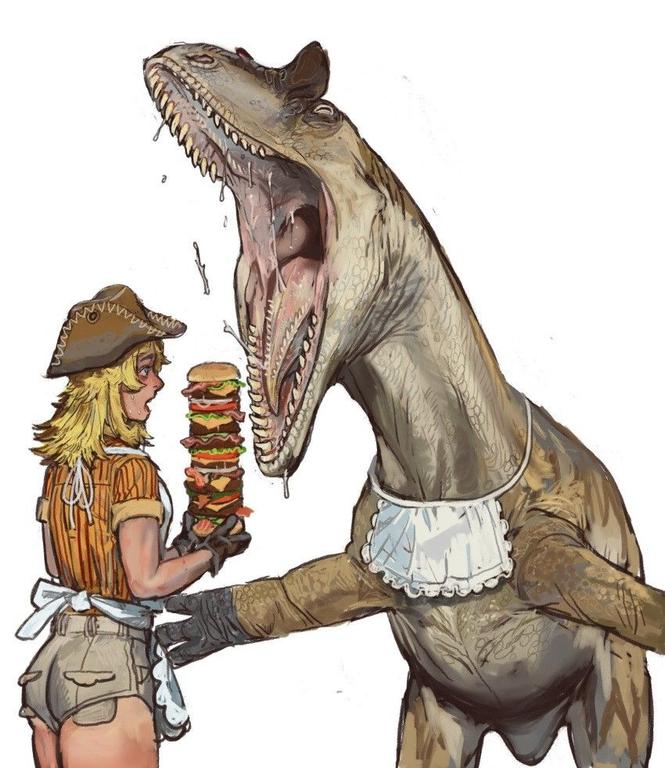
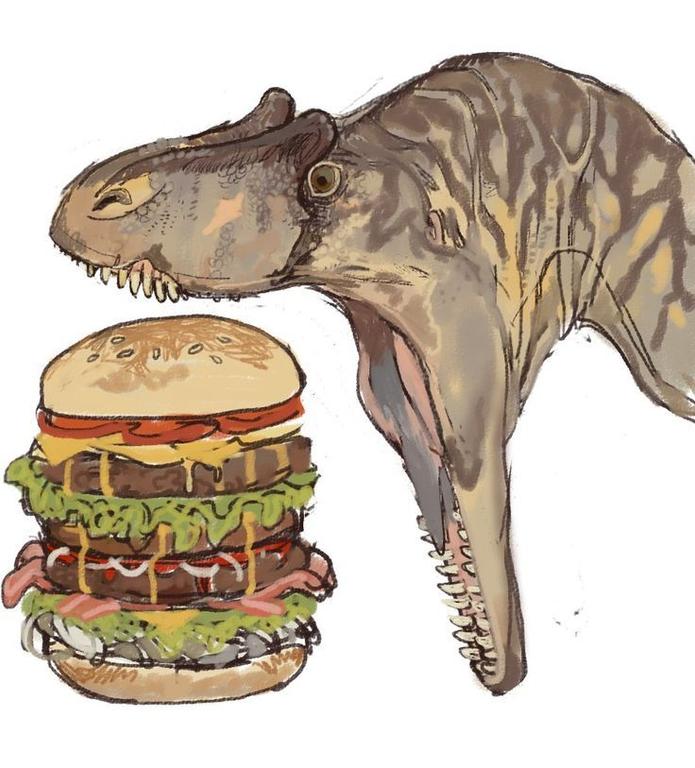
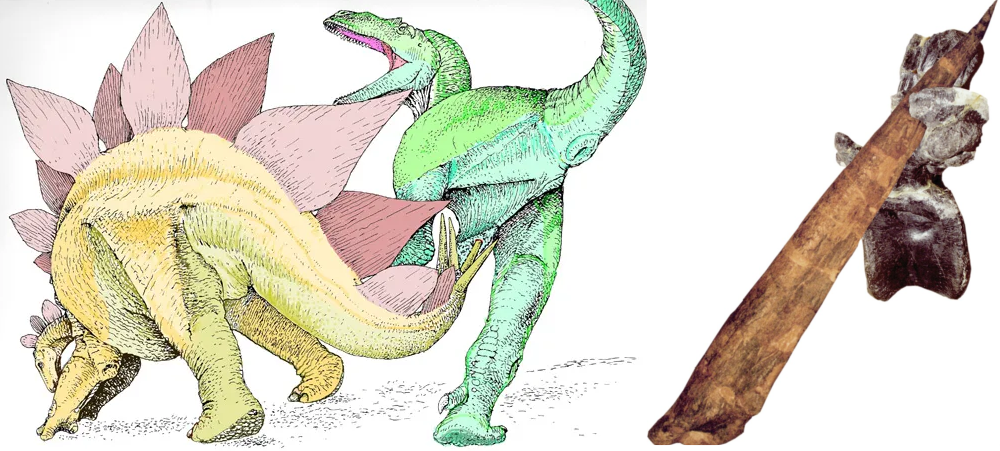
Allosaurus is the premier theropod of the Jurassic and is considered to be the lion of its time, averaging 28 feet long and 2.5 tons. Its most noticeable feature is the crests above its eyes, probably used to attract mates and keep the sun out of its eyes. Allosaurus had 20-degree vision, meaning its vision overlapped in a small area, so if prey left that field, Allosaurus would struggle to track with depth perception. Allosaurus had a relatively basic brain structure similar to that of a crocodile. It had a large olfactory bulb but a small piriform cortex, meaning it had a strong sense of smell, but had trouble recognizing and processing advanced smells. Its ears were adapted for low-frequency noises, which indicates they communicated with such noises as grumbles. They had well-developed, long arms with 3 digits often having tendon avulsions, indicating Allosaurus likely used its arms in combat upon struggling prey such as Dryosaurus or Camptosaurus before they could run away, injuring their arms in the process. Allosaurus scavenged at possibly hunted weak, sickly, or juvenile sauropods such as Diplodocus, Pleurocoelus, Apatosaurus, and Camarasaurus. Allosaurus could open it's jaw a whoping 79°, I think it's to fit it's mouth on large sauropods, but we still don't known why? At one point it was theorized that Allosaurs would use this gape to slam it;s upper jaw down, this theory is frequently called Hatchet Allosaurus and is now considered outdated. Allosaurus and Stegosaurus likely fought frequently throughout their lives, with Stegosaurus found to have Allosaurus bite marks on its plates. In contrast, an Allosaurus was found with a hole in its pelvis from a Stegosaurus's thagomizer. Ceratosaurus was another large theropod coexisting with Allosaurus, though it was smaller; the two are determined to have a fierce rivalry, with locations only consisting of one species of fossils as they held territory from the other. Of its species A. fragilis is type species and the most commonly found. A. europaeus is just like A. fragilis, but for specimens from Portugal. A. jimmadseni came 5 mya before A. fragilis and has a lighter build than it. Allosaurus is part of the group Allosauridae, of which it is the only member. A genus once part of the group called Saurophaganax was believed to be similar to Allosaurus but larger, although bones from a sauropod have been mixed in with it. Those Allosaurus bones have been assigned to A. anax, but I wish Saurophaganax was still a valid genus because the name means “lord of the lizard eaters” which is an awesome name. Allosaurus went extinct at the end of the Jurassic for unknown reasons, but likely due to climate change, the disappearance of prey like sauropods and competition from other carnivores like early carcharodontosaurs.


History & Fossils ~ ~ ~ ~
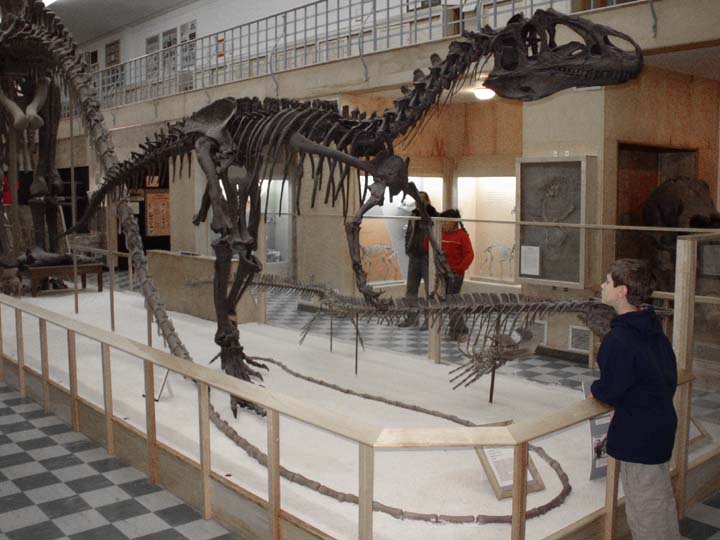
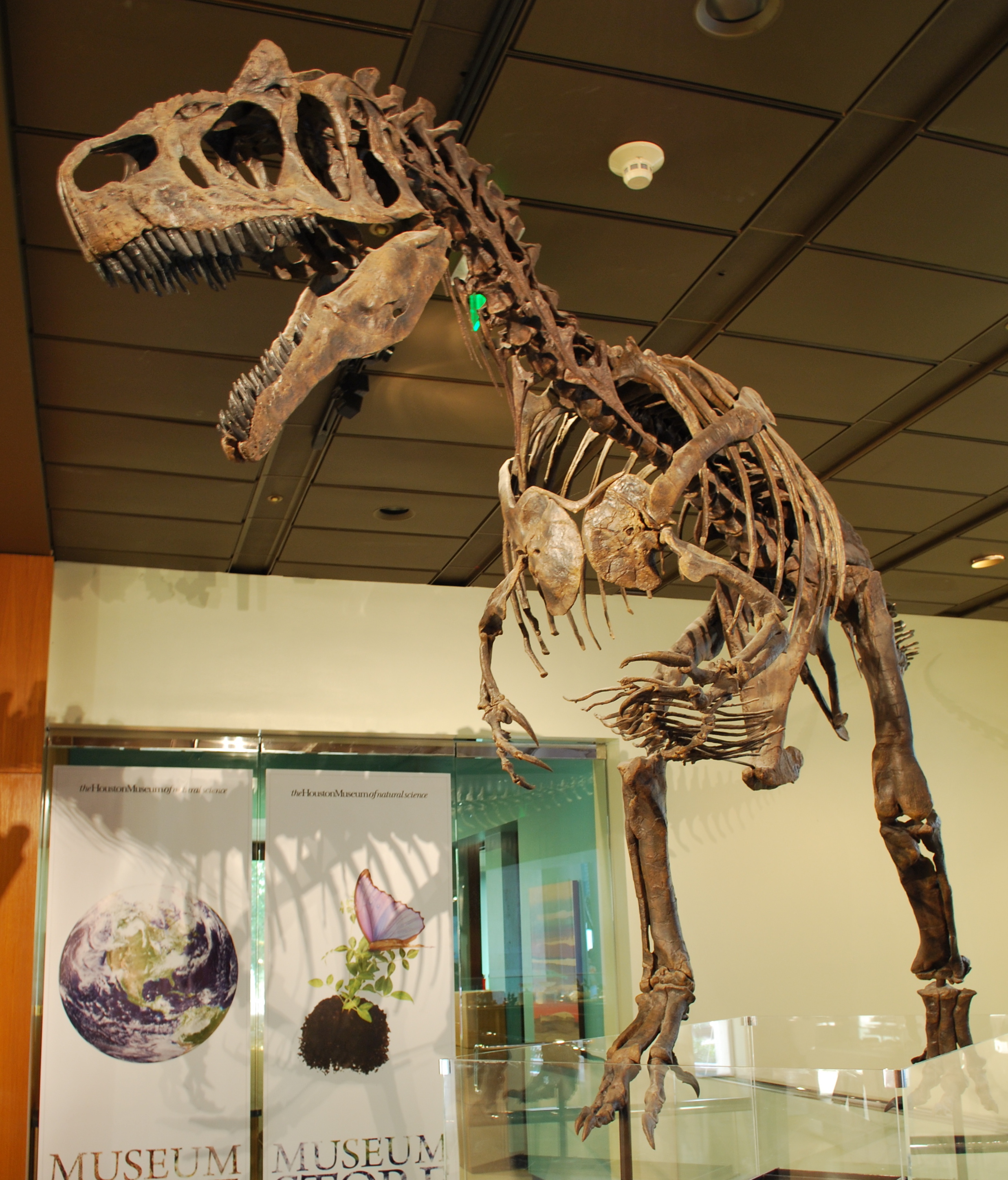
Countless Allosaurus fossils have been found, more than any other Jurassic dinosaur. The first bone was found in 1869 and was thought to be an ancient horse hoof until Joseph Leidy found it to be a tail vertebra. This bone would be assigned to the genus Poekilopleuron, then later given its own genus Antrodemus. Allosaurus was named and described by Othniel Charles Marsh in 1877. During the bone wars, 3 different genera were redescribed as Allosaurus by Charles W. Gilmore: Labrosaurus, Epanterias, and Creosaurus. Charles W. Gilmore also argued that Antrodemus should be the valid name for Allosaurus since it was discovered first, and that was the case for around 50 years until James H. Madsen decided that Anthrodemus shouldn't be the valid name since it came from one bone that didn’t even have a clear origin. Big Al is one of the most famous fossils ever recovered, being a 95% complete skeleton of an adolescent male A. jimmadseni found in 1991, he had damaged ribs from combat with another Allosaurus and a blistering toe infection that caused his demise. Big Al was so good that he had a sequel five years later, in which paleontologists found another nearly complete Allosaurus, which they named Big Al 2. Big Al mk2 was discovered only a mile away from Big Al and is another A. jimmadseni which is now displayed all the way in Switzerland.

Media Deptictions ~ ~ ~ ~
Ballad of Big Al Came out on December 25th 2000 after the Walking with Dinosaurs series concluded. The Ballad of Big Al goes over the presumed life story of Big Al from the time of his birth to his premature death. It showcases much of the Harsh conditions of the Jurassic and interprets reasons for Big Al's injurys, such as an attack from a larger female Allosaurus when attempting to mate for his rib fractures. And tripping over a tree log while hunting Dryosaurus to explain his foot infection. Allosaurus in Walking with Dinosaurs has an unnatural posture, and looks horribly shrink-wrapped, as if it were about to die from starvation. The red color accents on the crests are nice though.


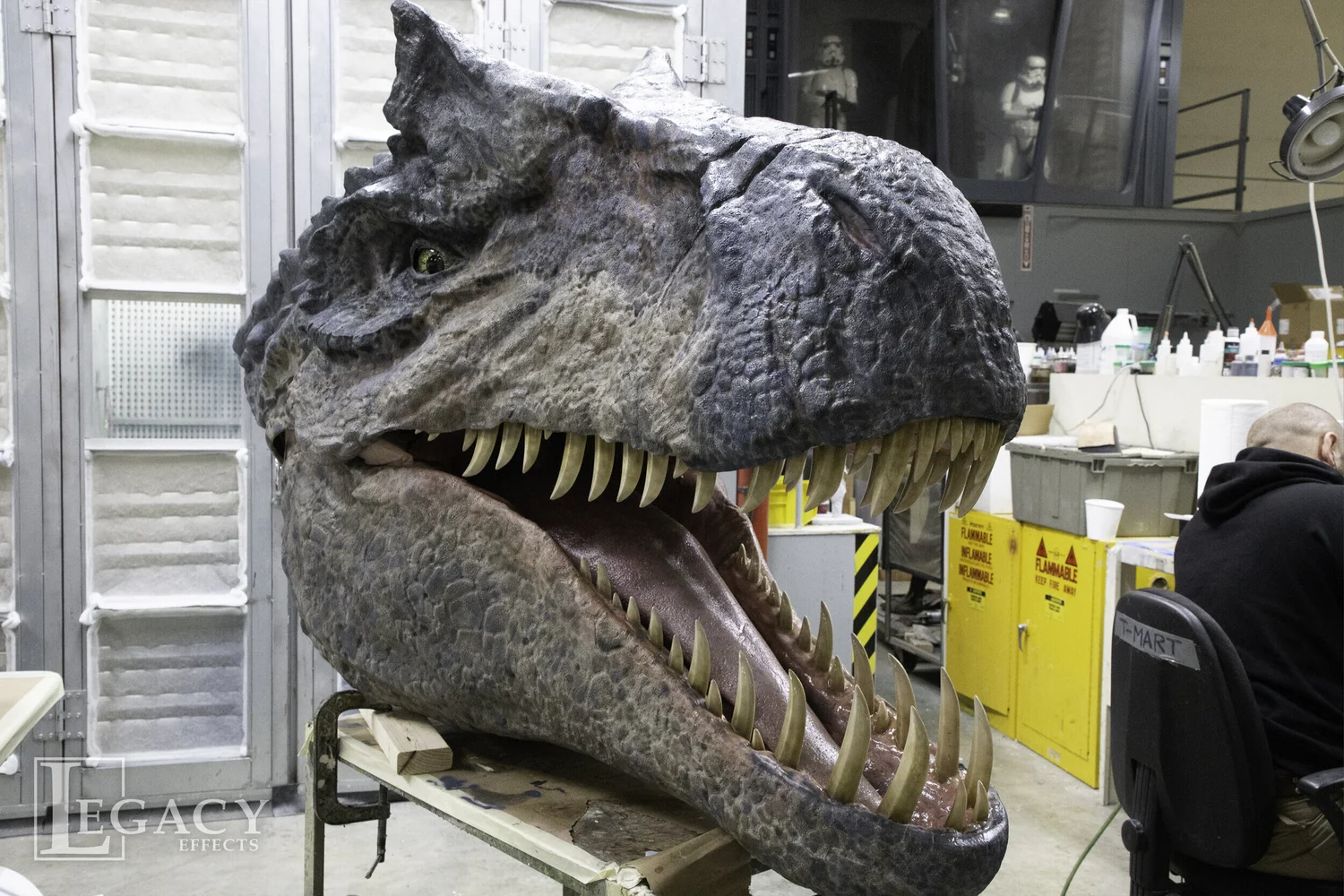
Jurassic World Allosaurus has had two main film designs, one for Jurassic World Fallen Kingdom where it is based upon A. jimmadsen and only has a backround role most noteable for getting hit by volcanno debris. For the short film Battle at Big Rock (video 4) a new monsterous Allosaurus was made, that is drastically larger with crocodile scutes and spikes along the back of the body. Theres no in-universe reason why this Allosaurus looks different, but I presume Fallen Kingdom's Allosaurus is a female while Big Rock's Allosaurus is a male. I also have the hammond collection figure for this Allosaurus so I have a soft spot for it.

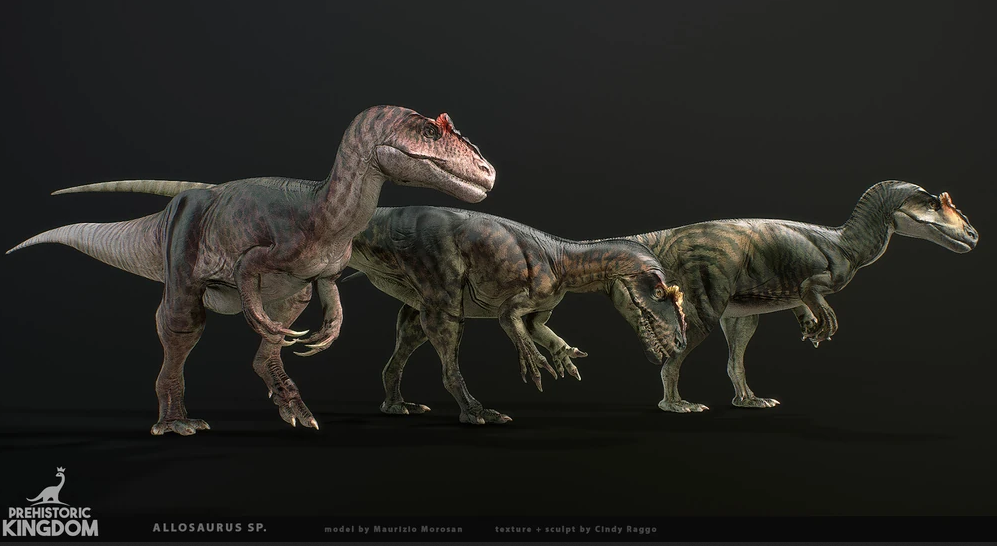
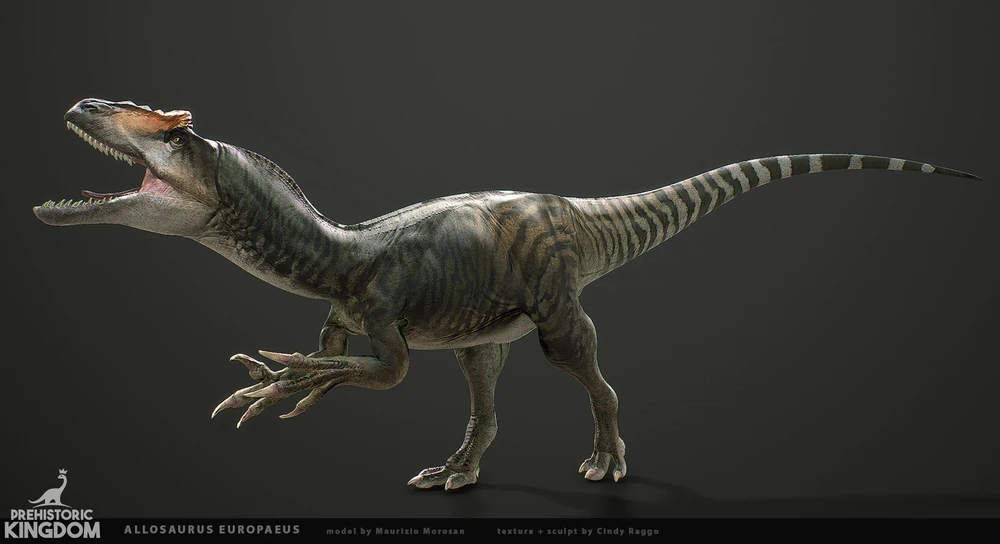
Prehistoric Kingdom Three species of Allosaurus are coming in Update 17 alongside Stegosaurus Baryonyx and Saurophaganax making a suprise cameo even though it's a dubious genus. Three species of Allosaurus are planned A. fragilis jimmadseni and A. europaeus.
Dinosaur Revolution is set in Europe and is about A. europaeus, particularly one fossil of an Allosaurus with a broken jaw that healed over. Just called Broken Jaw by most people, in the show this Allosaurus broke it while he was a juvenile, attempting to intimidate a Dinheirosaurus, causing it to retaliate by breaking its jaw with its whip tail. Allosaurus later grows up and heals as he discovers a new challenger in his territory, a Torvosaurus. After nearly dying while attempting to scare the competition. Allosaurus has to team up with Dinheirosaurus and Miragia to kill the Torvosaurus just like a cartoon.
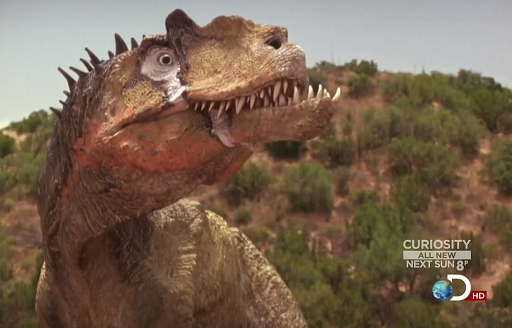
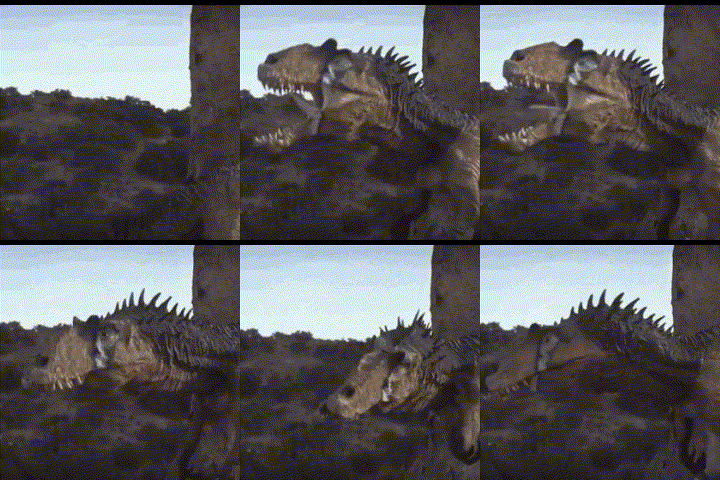
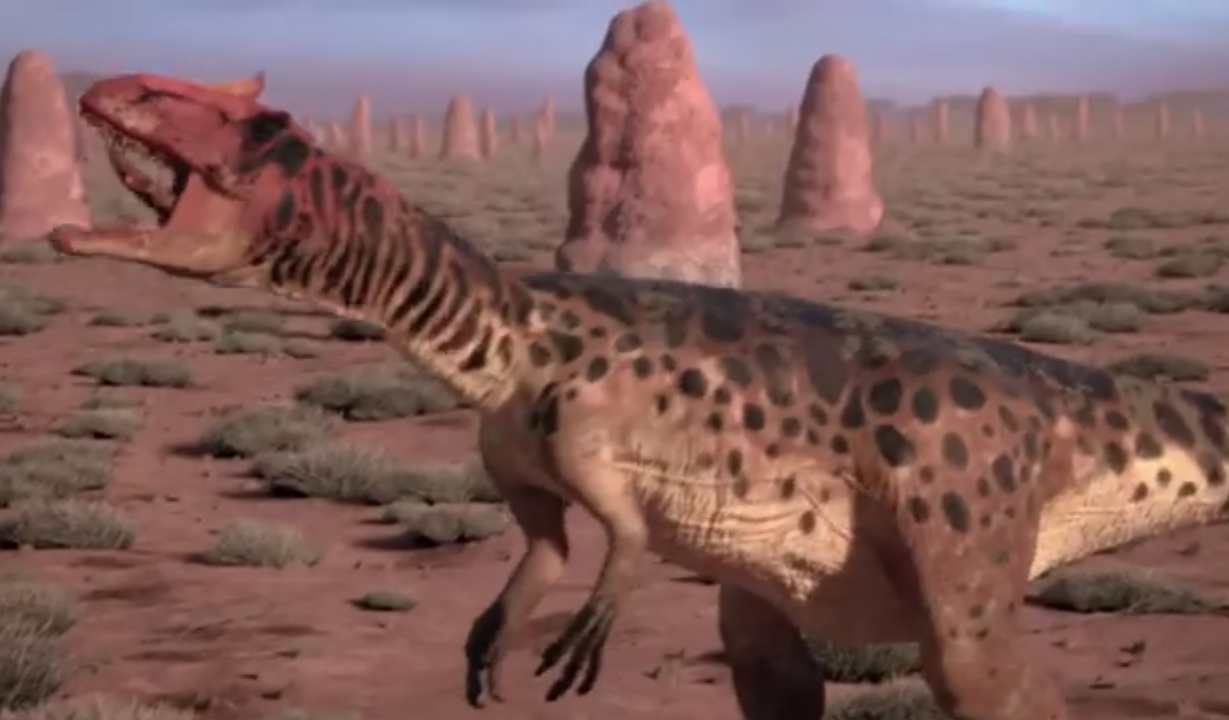
Planet Dinosaur I've seen the clip of the Allosaurus chasing a Dryosaurus in way too many youtube videos for some reason. It uses the outdated hatchet bite for Allosaurus where it would slam down it's upper jar on it's prey. And it's pattern pattern is cool and makes sense when looking at all the red ant hills in the backround.

Extras: ~ ~ ~ ~
Stegosaurus stenops vs Allosaurus fragilis by VibrantNebula on Sketchfab
Allosaurus fragilis - The Isle by AllThingsSaurus on Sketchfab